
SMD vs HOB vs GOB vs COB: LED Module Technology Explained
Pixel pitch gets the attention, but the way LEDs are mounted and sealed on the panel decides whether a screen survives your venue. Here is what each module technology buys you, in plain English.
SMD, HOB, GOB, and COB are the four ways LEDs are mounted and sealed on a video wall panel. SMD is the cost-effective indoor standard, HOB adds contrast under room lighting, GOB seals every diode in clear epoxy for gyms, rentals, and outdoor-adjacent spaces, and COB delivers the finest pitch with the most durable face for premium close viewing. We match the construction to your venue before quoting. Call (469) 334-4823.
Pixel pitch tells you how sharp a screen is. Module technology tells you if it will survive the room.
Two panels can share the same pixel pitch and look identical on a spec sheet, yet perform completely differently once installed. The module technology is how the red, green, and blue LEDs are packaged and mounted onto the circuit board, and that construction decides how a panel handles humidity, crowds, transport, and years of daily use.
There are four technologies in common use: SMD (Surface Mounted Device), HOB (Hybrid on Board), GOB (Glue on Board), and COB (Chip on Board). Each is a different trade-off between cost, durability, and image quality.
The four technologies at a glance
| Technology | Full name | Durability | Image quality | Best fit |
|---|---|---|---|---|
| SMD | Surface Mounted Device | Built for controlled indoor spaces; diodes sit exposed on the board | Wide viewing angles, consistent color, most cost-effective | Ballrooms, sanctuaries, indoor stages and signage |
| HOB | Hybrid on Board | Modestly better sealing than SMD | Black-faced packages give deeper blacks and better contrast under room lighting | High-traffic lobbies, retail, busy indoor venues |
| GOB | Glue on Board | Clear epoxy seals every diode against moisture, dust, and impact | Comparable to SMD with better surface uniformity | Gyms, rental walls that travel, outdoor-adjacent spaces |
| COB | Chip on Board | Most durable surface of the four; nothing to shear off | Finest pitch, best contrast, flawless up close | Lobby features, boardrooms, broadcast and close viewing |
What each construction method actually buys you
SMD: the indoor workhorse
Each pixel is an individually packaged RGB diode cluster soldered to the board. That packaging gives SMD its wide, consistent viewing angle and keeps cost down, which is why most indoor walls are built on it. The trade-off: each pixel is a small exposed component, so it belongs in climate-controlled spaces.
HOB: contrast under real lighting
HOB keeps the SMD mounting approach but switches to black-faced packages that absorb ambient light instead of reflecting it. The practical result is deeper blacks and noticeably better contrast in a bright room, a real upgrade for lobbies and daylight-adjacent spaces.
GOB: sealed and roadworthy
A clear epoxy resin encapsulates the entire mounted LED surface, so there is no exposed component to knock loose or corrode. That is why GOB is the go-to for gyms, rental walls that travel between venues, and any space where crowds or humidity are a factor.
COB: fine pitch, tough surface
Bare LED chips are encapsulated directly in clusters, with no individual package to shear off. COB delivers the finest pixel pitches, the widest viewing angles, and the most durable face of the four, which is why it owns the premium close-viewing tier.
Four American-made product lines, one for every venue
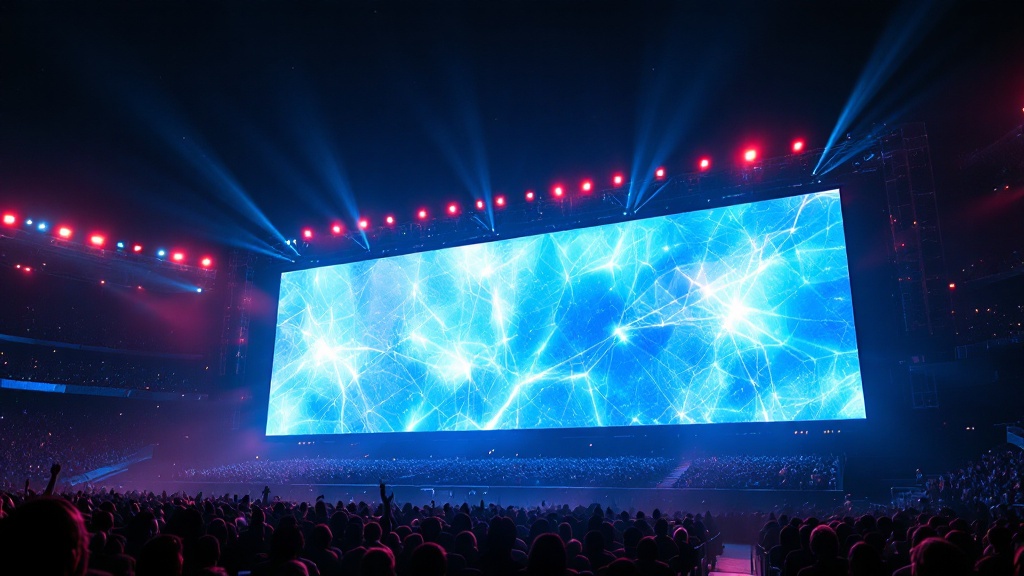
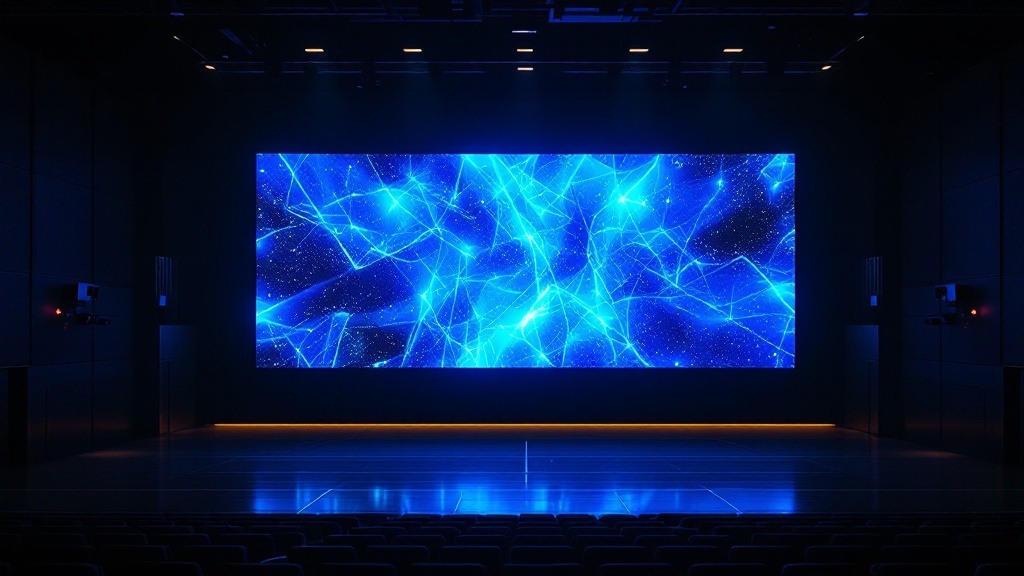
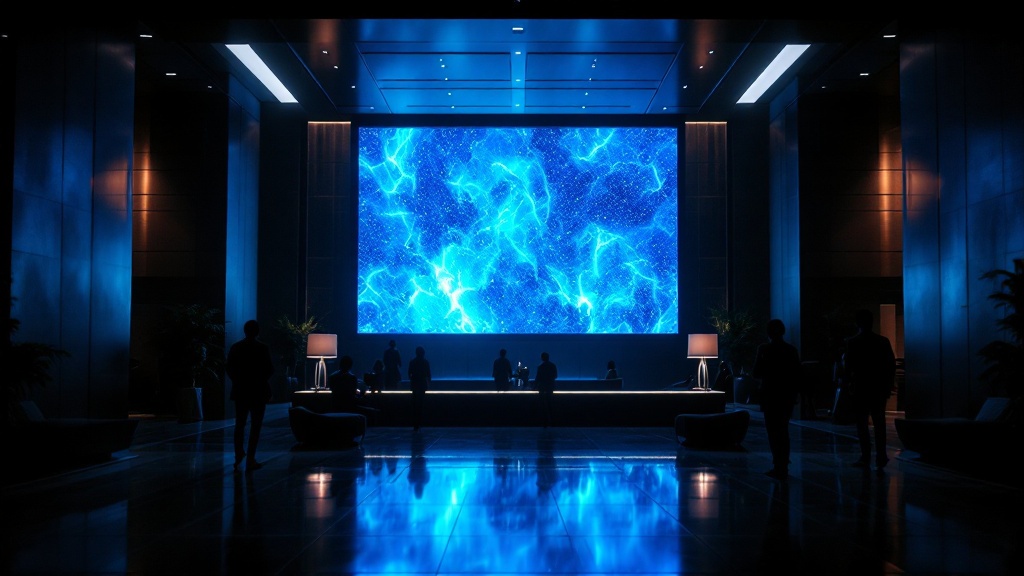
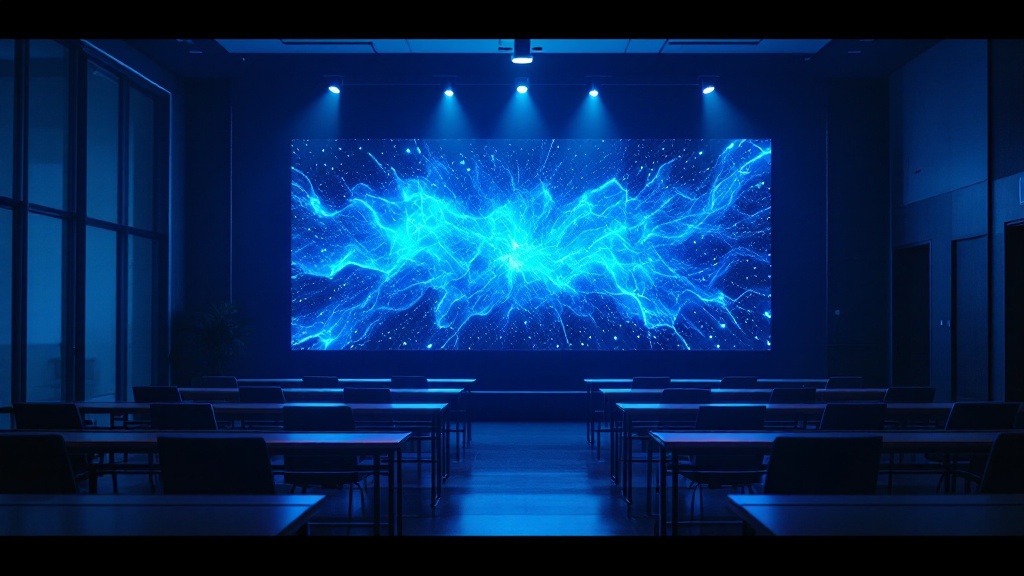
Through our manufacturing partner Visualize LED, an American LED display company founded in San Diego in 2010 with offices in California, Pennsylvania, Florida, and Texas, we spec four panel families that cover everything from a classroom display to a stadium wall. All are rated for a 100,000+ hour lifespan, and every install carries a 3-year warranty with support for as long as you own the panels.
| Line | Pixel pitch | Brightness | Built for |
|---|---|---|---|
| Dream | 3.91 / 4.81mm | Up to 5,500 nits | Outdoor walls, stadiums, festivals, daylight events |
| Imagine | 2.6–4.81mm | Up to 3,300 nits | Gyms, auditoriums, mid-size venues |
| Envision | 1.25–4.0mm | Indoor rated | Fine-pitch signage, lobbies, close viewing |
| Inspire | 2.5mm | Indoor rated | All-in-one displays with built-in processor for meeting rooms and classrooms |
Which technology for which job?
Renting for an event?
Rental walls take transport and crowds, so sealed construction matters as much as pitch. We spec it for you.
LED screen rentals →Planning a permanent install?
Mounting, wiring, calibration, and a 3-year warranty on the finished wall.
LED screen installation →Going outdoors?
Daylight-bright, weather-rated walls built for Texas sun, heat, and wind.
Outdoor LED displays →Module technology FAQ
What is the difference between SMD, HOB, GOB, and COB LED panels?
They are four ways of mounting and sealing the LEDs on the panel. SMD surface-mounts individually packaged diodes and is the cost-effective indoor standard. HOB uses black-faced packages for deeper contrast. GOB seals the whole surface in clear epoxy for moisture and impact resistance. COB encapsulates bare chips directly for the finest pitch and the toughest surface.
Which LED module technology is best for outdoor events in DFW?
Outdoor and semi-protected installs favor GOB construction because the sealed epoxy surface shrugs off moisture, dust, and contact. For fully outdoor walls we pair that with high-brightness, weather-rated panels up to 5,500 nits that stay readable in full Texas sun.
Is COB worth the extra cost?
COB makes sense when viewers stand close to the screen and image quality matters most, such as lobby features, boardrooms, and broadcast sets. For a typical event wall viewed from a distance, SMD or GOB delivers the same visual result for less.
Does module technology matter for a rental?
Yes. A rental wall that travels, gets stacked, and lives around crowds takes far more physical contact than a permanent install, so sealed GOB-style construction holds up better on the road. It is one reason we spec construction, not just pixel pitch.
What panels do you actually use?
We spec panels from our manufacturing partner Visualize LED, an American LED display company founded in San Diego in 2010, across four product lines that cover outdoor stadium walls, gym and auditorium screens, fine-pitch indoor signage, and all-in-one classroom or office displays. All are rated for a 100,000+ hour lifespan and every install carries a 3-year warranty.